
House
surrounds
Our house surrounds
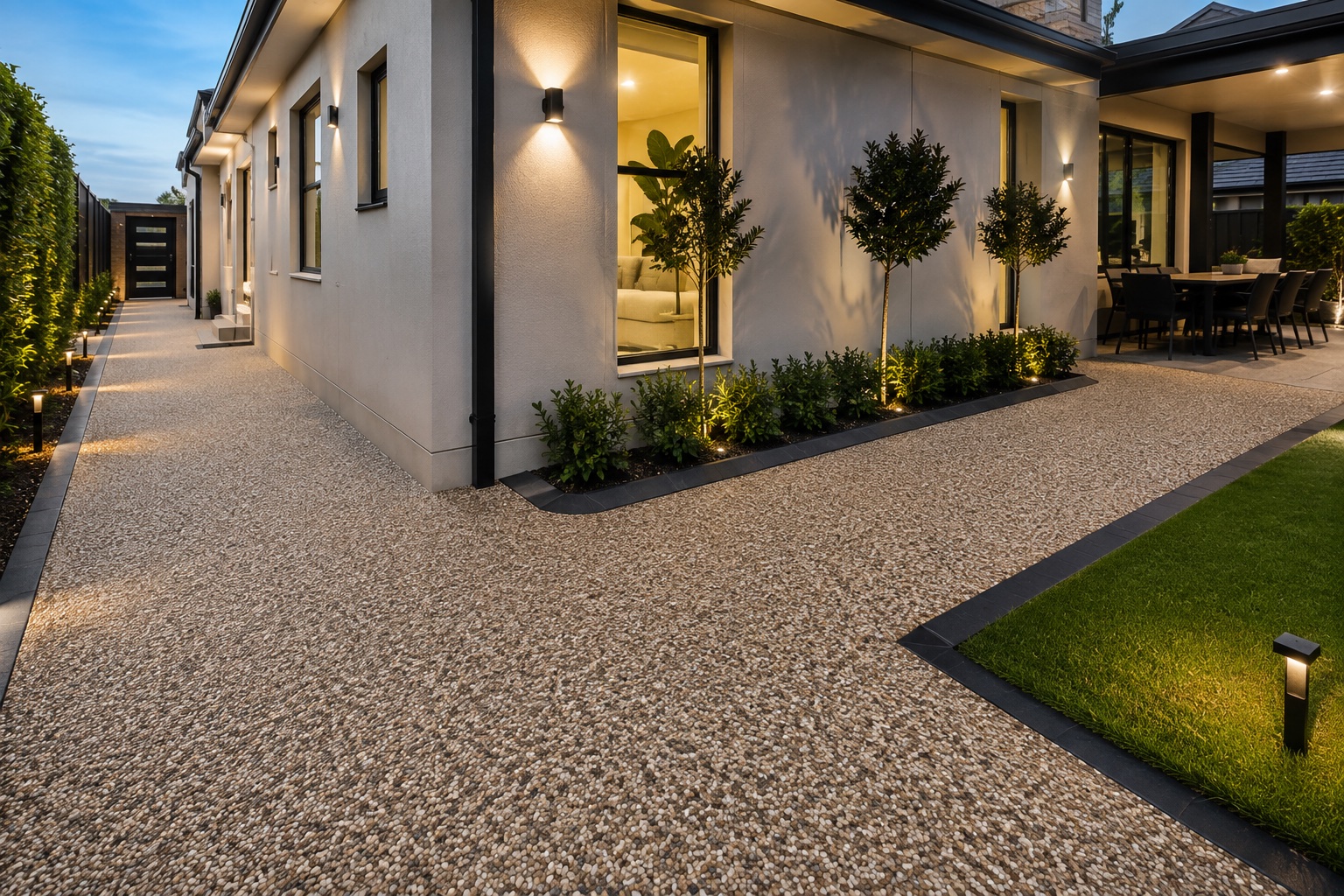
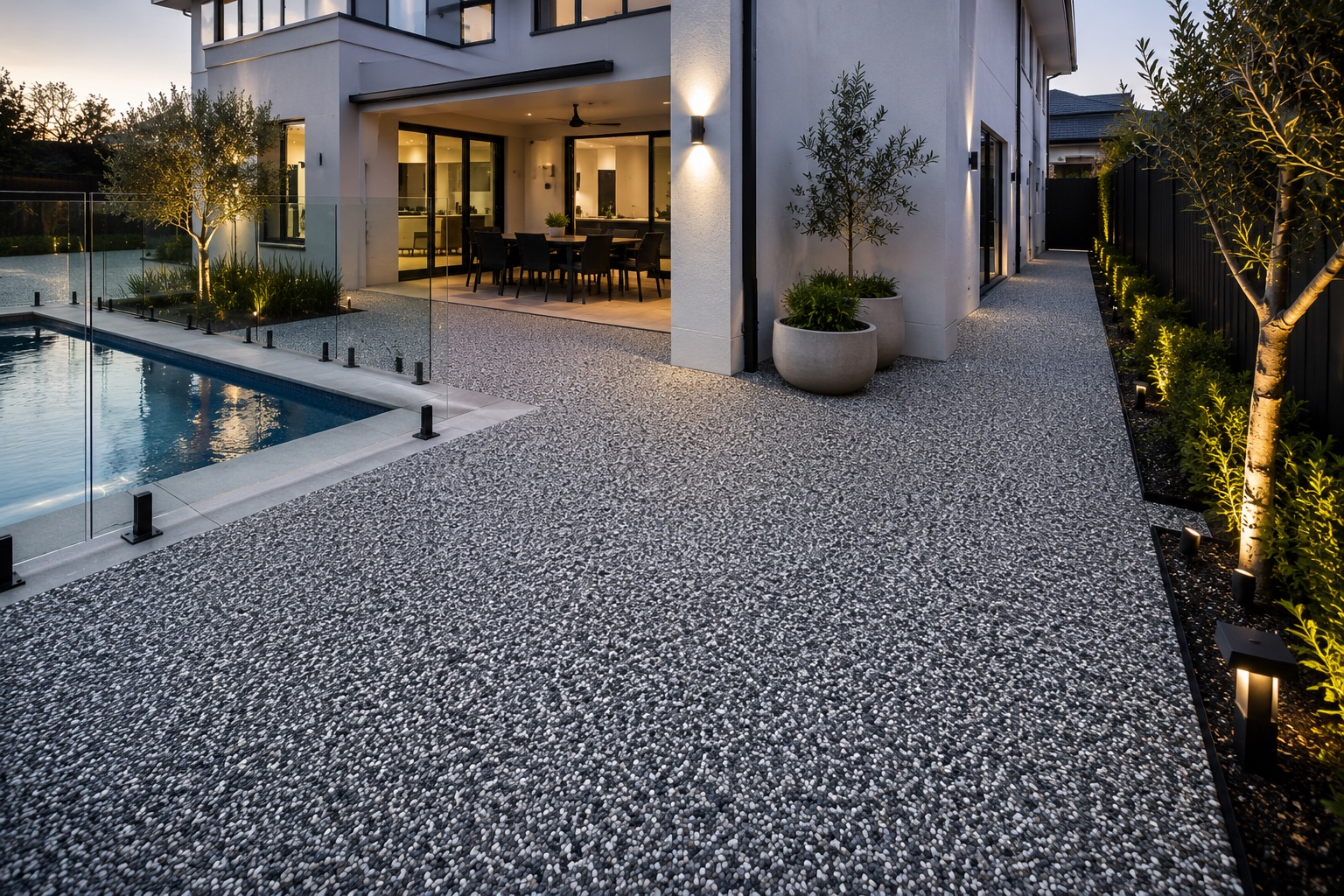
The side paths and aprons around your home rarely get the attention the front does — yet they’re the surfaces you walk every day, and they do real work keeping water away from your footings. We finish them to the same standard as the rest of the property: a seamless natural stone surface running flush against walls, steps and garden edges, laid in days, not weeks.
Because the surface is trowelled in place rather than laid in units, it follows a side return that narrows to under a metre and steps neatly around downpipes and meter boxes without a single cut paver. It’s permeable, so rain drains straight through instead of pooling against the house, and with no joints for weeds to take hold in, the perimeter stays tidy year round — the kind of finish that quietly lifts the whole property.
With Signature Resin Paving you get the job done properly: premium resin systems, an honest assessment of your surrounds before we quote, a fixed written price, and a 10-year workmanship warranty behind the finish. The people who quote your surrounds are the people who lay it.
Where it works
Side returns & narrow strips
Tight perimeter paths where standard paving means constant cutting.
Perimeter aprons
Aprons that run around the base of the house, often against a damp course or cladding.
Service area access
Paths to meter boxes, bin storage and side gates that need to stay usable and dry.
Key benefits
- Follows narrow, irregular perimeter shapes without cut units
- Detailed around downpipes, meter boxes and service penetrations
- Permeable, keeping water moving away from footings rather than pooling
- Continuous surface with no joints for weeds to establish in
- Laid over existing sound concrete or a new compacted base
- Matches or complements paving used elsewhere on the property
What we check before quoting
We find perimeter areas are more often the problem child of a paving job than the main driveway, because they're where drainage issues actually show up — against a damp course, at a downpipe outlet, or where the ground has settled over time near the footings.
We check where water currently drains at the perimeter and whether the existing fall moves it away from the building or, less helpfully, toward it. That decides how the new surface is set out before it decides how it looks.
Tree roots and settled ground are more common around house perimeters than in open areas, and we look for both before quoting rather than after starting.
How we install it
We find narrow and irregular areas are more labour per square metre than a large open surface, and the existing substrate is more often the source of any problem. We assess what the strip is sitting on and whether it's moving.
Edges take proportionally more attention here than on a driveway, because a narrow perimeter path is almost all edge — against the house, a fence, garden beds and service penetrations, each detailed differently.
Falls are set to move water away from the building, adjusted where the existing ground doesn't already do that on its own.
Common questions
Why pave the surrounds instead of leaving gravel, pebbles or old concrete?
Gravel scatters, weeds push through it, and old perimeter concrete cracks and holds puddles against the house. A resin bound surround gives you a tidy, weed-free perimeter finished to the same standard as the front of the home — and because it’s permeable, water drains through instead of pooling against the walls.
How long do house surrounds last, and are they under warranty?
Prepared and laid correctly, a resin bound surface is a 15-plus year finish, and perimeter paths carry only foot traffic. Our workmanship is backed by a 10-year warranty (terms and conditions apply) alongside your rights under Australian Consumer Law, with the terms in writing alongside your quote.
Can it be laid in a side return under a metre wide?
Yes — narrow side returns and perimeter strips are exactly where resin bound surfacing shines. Because it’s trowelled in place rather than laid in units, it follows an awkward width or an irregular edge without a single cut paver, sitting flush against walls, fences and garden edges.
How do you handle downpipes, meter boxes and drains?
Each one is detailed into the layout before anything is laid, so the finished surface sits neat and flush around every penetration rather than being patched in afterwards. A narrow perimeter path is almost all edges, and the edges are where we spend the care.
Will it help with water pooling against the house?
In most cases, yes — the surface is permeable so everyday rain drains through it, and we set the falls to move water away from the building. If the underlying issue is damp-proofing or drainage rather than the surface, we’ll tell you honestly before quoting rather than paving over the problem.
How much maintenance does it need?
Very little. There are no joints for weeds to establish in and no gravel to rake back into place — an occasional sweep or rinse with the hose keeps the perimeter looking as tidy as the day it was laid.
How do I get a price?
Send through the areas you’d like surfaced, what’s there now and a photo or two, or ask us to inspect on site. We’ll come back with a fixed written quote with the scope spelled out — free, and with no obligation.
Every side of your home,
finished properly.
Send through the areas you’d like surfaced and a photo or two, and we’ll come back with a free fixed written quote — no surprises, no obligation.